Spoiled silage is one of the most expensive, avoidable losses on an Indian dairy farm. A farmer can do everything right at harvest and chopping, only to open the pit or bag months later to a black, moldy, foul-smelling mess — and lose 15–30% of stored feed value in the process. Worse, spoiled silage that does get fed can trigger reduced milk yield, digestive upset, and in serious cases, mycotoxin-related herd health problems.
The good news: silage spoilage has a small number of root causes, and nearly all of them are preventable with the right storage method and the right biological additives at the time of ensiling.
What Actually Causes Silage to Spoil
1. Oxygen Exposure (Aerobic Spoilage)
Silage is preserved through fermentation, which only works in an oxygen-free (anaerobic) environment. The moment air reaches the fodder — through a torn bag, a poorly sealed pit, or loose packing — aerobic bacteria, yeasts, and molds take over instead of the beneficial lactic acid bacteria. This is the single biggest cause of spoilage on Indian farms, especially with traditional open-pit storage.
2. Poor Compaction at Filling
If chopped fodder isn't packed tightly enough during filling, air pockets get trapped inside the mass. Even a well-sealed bag or pit will spoil from the inside out if compaction was inadequate.
3. Incorrect Moisture Content
Fodder that's too wet (above ~70% moisture) produces a poor-quality, effluent-leaking silage prone to clostridial (butyric acid) spoilage — recognizable by a rancid, rotten smell. Fodder that's too dry (below ~60% moisture) doesn't pack down properly, leaving air pockets that invite mold.
4. Slow or Weak Fermentation
Natural lactic acid bacteria on the crop surface aren't always present in sufficient numbers, especially with monsoon-affected or dust-heavy fodder. Without enough of the right bacteria to rapidly drop the pH, fermentation is slow — giving spoilage organisms a window to establish themselves before the silage is safely acidified.
5. Rodent and Physical Damage
Even a small puncture from rodents, sharp stubble, or careless handling introduces air into an otherwise well-sealed bag, creating a localized spoilage zone that can spread.
6. Extended Feed-Out Exposure
Spoilage doesn't stop once the bag is opened. If the exposed face isn't fed out fast enough, or isn't re-sealed properly between feedings, air continues to degrade the remaining silage — this is called secondary or feed-out spoilage.
How to Spot Spoiled Silage Early
- Smell: Good silage smells mildly sour (like yogurt or vinegar). A sharp ammonia smell, a rancid butter smell, or a musty/moldy smell all indicate spoilage.
- Color: Healthy silage is yellow-green to olive-brown. Black or grey patches, especially with visible mold (white, blue, or black fuzz), signal spoilage.
- Texture: Slimy or mushy texture, rather than firm and fibrous, points to butyric fermentation gone wrong.
- Heat: A warm spot inside the pit or bag when you dig in is a sign of aerobic (heat-generating) spoilage in progress.
How Silage Bags Prevent Spoilage
Compared to open-pit or trench silage, sealed silage bags directly remove the two biggest risk factors — oxygen exposure and inconsistent compaction:
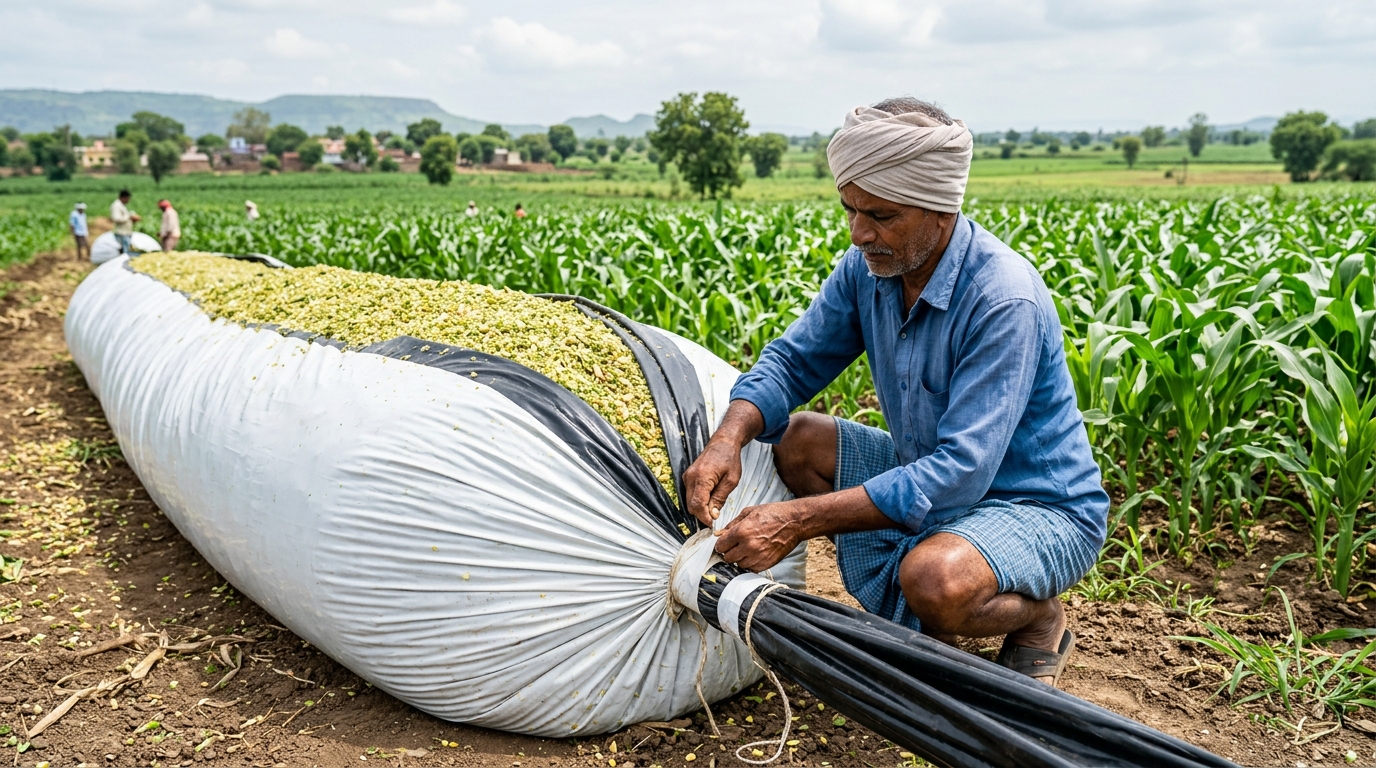
- Airtight sealing stops oxygen from re-entering once the bag is closed, maintaining the anaerobic environment fermentation needs from day one through feed-out.
- Uniform compaction is easier to achieve and maintain in a bag than in a large open pit, reducing internal air pockets.
- Protection from rain, rodents, and contamination that open pits are constantly exposed to, especially through the monsoon.
- Batch-sized storage lets farmers open only what they need, reducing feed-out exposure time compared to a single large pit that stays open for weeks.

How Silage Inoculants Prevent Spoilage

Bags solve the oxygen and compaction problem — inoculants solve the fermentation problem. A silage inoculant like AFI Silage Inoculant introduces a concentrated, reliable population of lactic acid bacteria (LAB) directly into the fodder at filling:
- Faster pH drop: More LAB means faster lactic acid production, so the silage reaches a stable, preservative pH (below 4.2) faster — shrinking the window in which spoilage organisms can take hold.
- Reduced nutrient loss: Faster, more efficient fermentation means less dry matter and energy is lost to competing (undesirable) microbial activity.
- Better feed-out stability: Certain inoculant strains improve aerobic stability, meaning the silage resists heating and spoiling even after the bag or pit is opened and exposed to air during feeding.
- Consistent results regardless of season: Naturally occurring LAB on the crop varies with weather, dust, and handling. Inoculants remove that guesswork, especially important for monsoon-cut or drought-stressed fodder in Indian conditions.
Bags + Inoculant: Why the Combination Matters
Using only a bag without an inoculant still risks slow or weak fermentation, especially with fodder that's dusty, monsoon-affected, or naturally low in surface bacteria. Using only an inoculant in an open, poorly sealed pit still risks spoilage from oxygen exposure at the edges and surface. The two solve different halves of the same problem — which is why AgriFuture India supplies both as a paired system for farmers moving from open-pit to sealed, science-backed silage storage.
Practical Checklist for Spoilage-Free Silage
- 1 Harvest fodder at the correct moisture stage (60–70%).
- 2 Chop to a uniform, recommended length for good packing density.
- 3 Apply AFI Silage Inoculant evenly during filling, not after.
- 4 Pack and compact firmly, layer by layer, to eliminate air pockets.
- 5 Seal the silage bag completely and check for punctures before storage.
- 6 Store off the ground, away from rodent access and direct sun.
- 7 At feed-out, remove only what's needed and re-seal the remaining face immediately.
Get the Right Silage Storage System for Your Farm
AgriFuture India manufactures and supplies silage bags and AFI Silage Inoculant to dairy farms across India, sized for everything from small household herds to large commercial dairies.
Get a Quote → or browse our Silage Bags range.
FAQs
Equip Your Farm with AgriFuture India
Manufacturer-direct pricing on HDPE Plastic Goat Slats, Heavy-Duty Chaff Cutters, Cow Rubber Mats, and 100% Virgin Silage Bags.