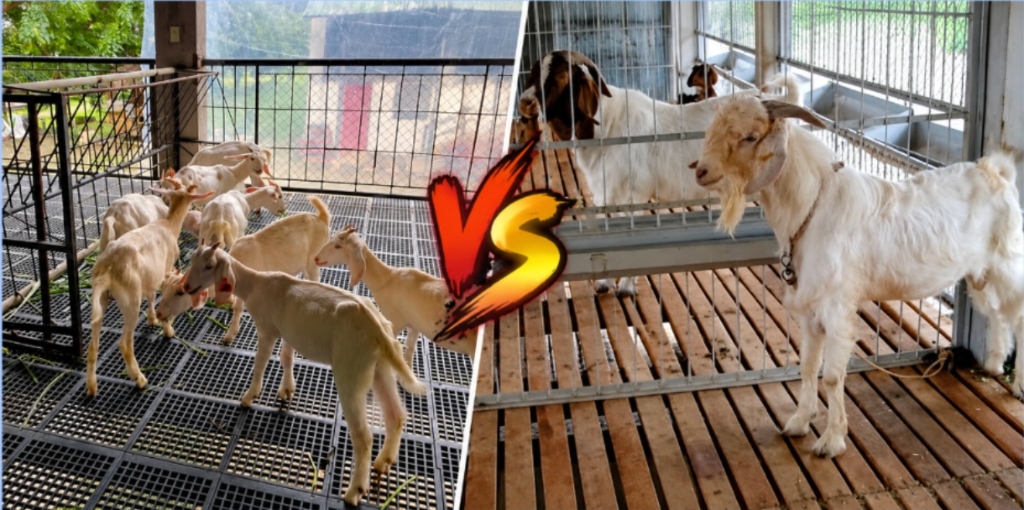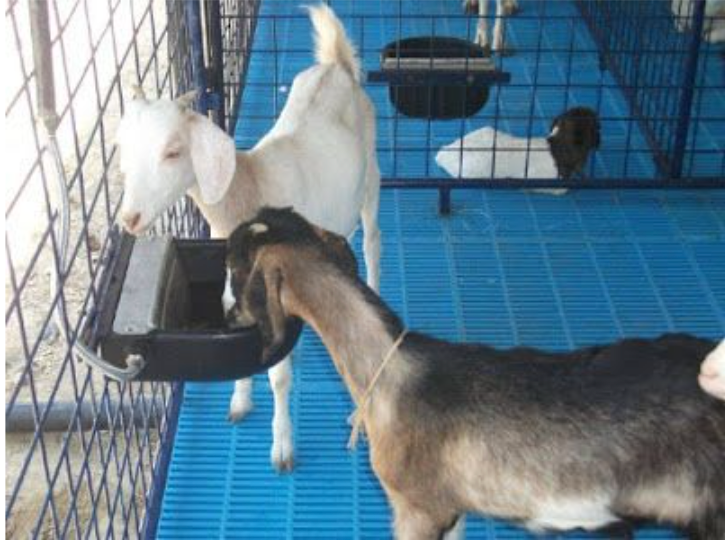
Ground-level housing puts livestock in constant contact with their own waste. Whatever the species, dung and urine build up faster than most farmers can manually clean it away -- and that build-up is where disease, parasites, and poor growth outcomes start. Elevated slatted flooring solves this the same way across very different animals: by physically separating livestock from waste the moment it's produced, rather than relying on cleaning schedules to remove it after the fact.
Here's why the same flooring principle works -- and why it matters slightly differently -- for goats, poultry, and pigs.
The Core Idea: Separation, Not Cleanup
Traditional solid flooring (mud, concrete, packed earth) requires waste to be manually removed on a schedule -- daily, sometimes more. In the hours between cleanings, animals stand, sleep, and feed in direct contact with dung and urine.
Elevated slatted flooring changes the mechanics entirely: animals stand on a raised, gapped surface, and waste falls through to a collection space below, out of contact with the herd or flock continuously -- not just after someone gets around to cleaning.
This single design shift is why slatted flooring shows up independently across goat sheds, poultry houses, and pig pens, despite how different these animals and their farming systems otherwise are.
Elevated Mechanics
Species-by-Species Breakdown
Goats: Hoof Health and Parasite Control
For goats, the biggest risk from ground-level housing is constant hoof exposure to wet, contaminated flooring:
- Foot rot and hoof infections are directly linked to prolonged contact with damp, waste-covered ground. Elevated flooring keeps hooves dry, which is one of the single most effective preventive measures available.
- Internal parasite cycles (worms, coccidia) often rely on fecal-oral transmission — animals ingesting contaminated feed or bedding. Separating goats from their own waste breaks this cycle significantly.
- Reduced skin and coat issues from prolonged contact with damp bedding.
- Goat slat flooring is typically built with gap spacing narrow enough to prevent hooves from slipping through, while wide enough for waste to pass freely — a balance that matters more for goats than for lighter or differently-shaped livestock.

Poultry: Ammonia Control and Flock-Wide Disease Prevention
In poultry housing, the stakes of ground-level waste buildup are arguably highest, because flock density is so much greater than in goat or pig housing:
- Ammonia buildup from accumulated droppings is a major respiratory stressor for birds, reducing feed efficiency and growth rates even before it becomes a visible health problem. Elevated flooring drops waste out of the immediate living space, cutting ammonia concentration at bird level significantly.
- Litter-borne disease control — coccidiosis and other litter-associated pathogens spread fastest when birds are in constant contact with damp, waste-mixed bedding. Slatted or raised flooring interrupts this.
- Reduced footpad dermatitis — a common and costly welfare/production issue in ground-raised poultry, directly linked to constant contact with wet litter.
- Better feed conversion outcomes — birds under less environmental and respiratory stress convert feed more efficiently, a direct production benefit beyond disease prevention.
Because poultry are raised at much higher density per square foot than goats or pigs, the hygiene benefit of elevated flooring compounds faster — a small amount of waste per bird becomes a large volume very quickly across a full flock.

Pigs: Wallowing Behavior and Structural Hygiene
Pigs present a specific challenge: they naturally root, wallow, and often deliberately use wet or muddy areas — meaning ground-level pens tend toward wetter, dirtier conditions than goat or poultry housing left unmanaged.
- Reduced mud and slurry buildup — elevated slatted flooring in pig housing removes the wet, semi-liquid waste layer that solid flooring allows to accumulate underfoot.
- Lower disease pressure — pig-specific pathogens that thrive in wet, fecal-contaminated bedding (various enteric and respiratory pathogens) are significantly reduced when waste doesn't accumulate at floor level.
- Improved weight gain consistency — pigs housed in cleaner, drier conditions show more consistent growth performance, since less energy and immune response is diverted toward managing environmental stress and infection.
- Easier slurry management — waste collected below slatted flooring can be channeled and managed as a unit, rather than manually scraped from solid flooring — a meaningful labor and infrastructure difference at scale.
Pig slat spacing and load-bearing requirements differ from goat or poultry flooring given pig weight and rooting behavior, so flooring built specifically for swine housing matters more here than a one-size-fits-all approach.

Common Benefits Across All Three
| Benefit | Goats | Poultry | Pigs |
|---|---|---|---|
| Reduced direct waste contact | Yes -- hoof/skin health | Yes -- footpad, respiratory health | Yes -- skin, respiratory health |
| Lower parasite/pathogen load | Yes -- fecal-oral cycle interrupted | Yes -- litter-borne disease control | Yes -- enteric pathogen control |
| Reduced ammonia/odor buildup | Moderate benefit | High benefit (density-driven) | High benefit |
| Labor savings on cleaning | Yes | Yes | Yes -- especially slurry handling |
| Growth/production consistency | Indirect (health-driven) | Direct (feed conversion) | Direct (weight gain consistency) |
What to Look for in Elevated Flooring, Regardless of Species
- Correct gap spacing for the specific animal's foot size and weight — too wide risks injury, too narrow limits waste fall-through.
- Load-bearing strength matched to the animal's weight and movement patterns — pigs and larger goats need sturdier support than poultry.
- Non-absorbent, easy-to-clean material — plastic slatted flooring resists the rot, bacterial buildup, and splintering that wooden flooring is prone to in constantly wet conditions (see our full breakdown on plastic vs. wooden goat slats).
- Accessible waste collection space beneath — the flooring only delivers its hygiene benefit if the space below is designed for regular, easy waste removal.
Explore Plastic Goat Slat Products


Get Elevated Flooring Solutions for Your Shed
AgriFuture India manufactures interlocking plastic slatted flooring for goat and sheep housing, built for Indian farm conditions and delivered across the country.
FAQs
Equip Your Farm with AgriFuture India
Manufacturer-direct pricing on HDPE Plastic Goat Slats, Heavy-Duty Chaff Cutters, Cow Rubber Mats, and 100% Virgin Silage Bags.