Slatted flooring isn't optional for a well-run goat or sheep shed — it's what keeps animals off wet, dung-covered ground and away from the parasites and infections that come with it. But the material you choose for that flooring matters just as much as the decision to install slats at all. Many Indian farmers still default to wooden slats simply because it's what's traditionally available locally — but wood comes with maintenance costs and health risks that plastic slatted flooring was specifically engineered to solve.
Why Slatted Flooring Matters in the First Place
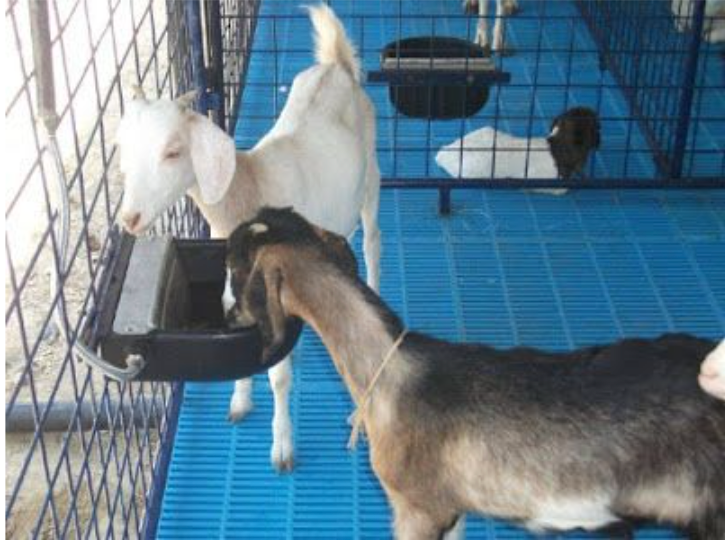
Goats and sheep kept on solid ground — mud, concrete, or bare earth — are constantly exposed to their own dung and urine. This raised, gapped flooring design lets waste fall through to a collection area below, keeping the animals on a dry, elevated surface at all times. The result:
Lower parasite load
Fewer worms and coccidia cycling back into the herd through fecal-oral contact
Reduced foot rot and hoof infections
Dry flooring is one of the single biggest factors in hoof health
Better respiratory health
Less ammonia buildup from wet bedding
Easier waste management
Dung collects below the slats for easy removal and composting, instead of being mixed into bedding
The question isn't whether to install slats — it's which material actually delivers on these benefits long-term.
Where Wooden Slats Fall Short
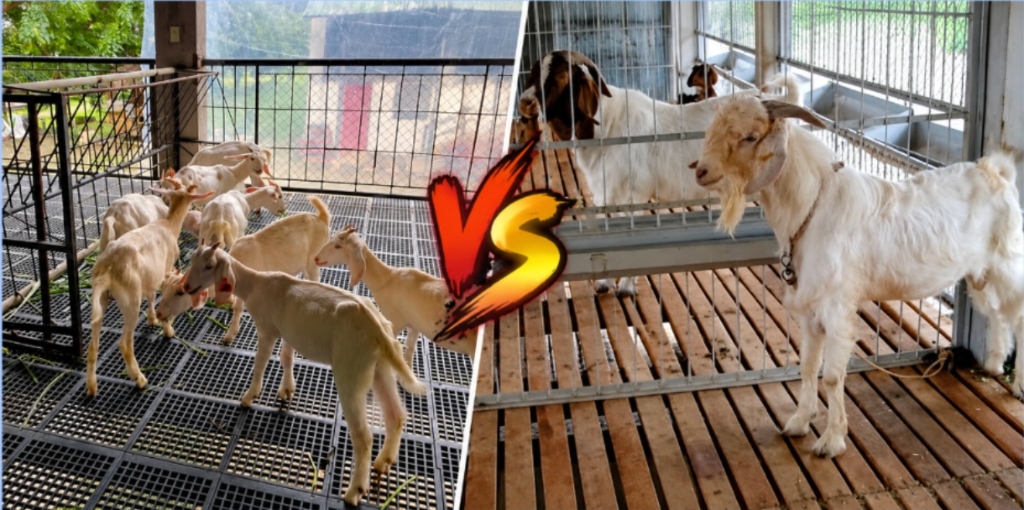
Wood is often the default simply because it's familiar and locally sourced, but it struggles specifically in the wet, high-waste-contact environment a goat shed creates:
- Absorbs moisture and rots — wood sits in constant contact with urine and dung; over time it softens, warps, and eventually breaks under animal weight.
- Splinters — as wood weathers, it cracks and splinters, creating sharp edges that can injure hooves and legs.
- Harbors bacteria and parasites — porous wood soaks up moisture and waste, becoming a breeding ground for the very organisms slatted flooring is meant to keep animals away from.
- Needs frequent replacement — rotted or broken slats have to be individually replaced, which means recurring cost and labor rather than a one-time investment.
- Uneven surfaces develop over time — as boards warp at different rates, gaps widen unevenly, increasing the risk of a hoof or leg slipping through.
None of this means wood "doesn't work" — it's been used for generations. But it requires constant upkeep to stay safe and hygienic, and that upkeep cost adds up over the life of a shed.
 Goat Hoof Damage and Infection from Poor Flooring
Why Plastic Slats Perform Better
Plastic slatted flooring was designed to solve exactly the failure points of wood:
- Non-absorbent surface — plastic doesn't soak up moisture, so it doesn't rot, warp, or become a bacterial reservoir the way wood does.
- No splintering — smooth, consistent edges stay safe for hooves for the life of the product, not just when new.
- Anti-skid, hoof-safe design — surface texture is engineered for grip, reducing slips compared to smooth or worn wooden boards.
- Uniform gap spacing that doesn't shift — because plastic doesn't warp with moisture the way wood does, gap width stays consistent, keeping waste fall-through reliable and hoof safety predictable.
- Easy to clean — plastic surfaces can be washed and disinfected directly, something porous wood can't handle without damage.
- Long service life — resistant to the rot, pest damage, and structural weakening that shortens a wooden installation's usable life.
- Interlocking, modular installation — panels connect together without the framing and carpentry work wood flooring typically requires.

The core difference comes down to this: wood is an organic material placed in a role that constantly exposes it to moisture and waste — the exact conditions it's least equipped to handle. Plastic slats are purpose-built for that environment from the start.
How to Install Plastic Goat Slats
Installation is designed to be straightforward, even without specialized labor:
- 1 Prepare the support structure — a raised frame (typically wood or metal beams) is built at the height you want the slatted floor to sit, with support spacing matched to the slat panel specifications.
- 2 Lay the support beams — spaced evenly across the shed width to support the interlocking panels without sagging under animal weight.
- 3 Place and interlock the panels — plastic slat panels click together edge-to-edge, starting from one wall and working across the shed.
- 4 Check gap alignment — ensure gap spacing is consistent across the full floor, so waste fall-through works evenly and no gap is wide enough to catch a hoof.
- 5 Secure the edges — panels along the shed walls and entry points are fixed down to prevent shifting under animal movement.
- 6 Set up the collection area beneath — the space below the slats should allow easy access for regular waste removal and cleaning.
* Most interlocking panel systems don't require nails, screws, or specialized tools for the panel-to-panel connection itself — the support frame underneath is the only part that typically needs basic carpentry or welding.
Wood vs Plastic: Quick Comparison
| Factor | Wooden Slats | Plastic Slats |
|---|---|---|
| Moisture resistance | Absorbs moisture, rots over time | Non-absorbent, doesn't rot |
| Splintering risk | Increases with age | None |
| Hygiene | Porous, harbors bacteria | Smooth, easy to disinfect |
| Gap consistency | Shifts as wood warps | Stays consistent |
| Maintenance | Frequent board replacement | Minimal, occasional cleaning |
| Installation | Carpentry-heavy | Interlocking, modular |
| Long-term cost | Lower upfront, higher recurring | Higher upfront, lower recurring |
Is It Worth the Switch?
If you're building a new shed, plastic slats generally work out cheaper over the life of the flooring, since you avoid the recurring cost of replacing rotted or splintered boards. If you already have a wooden slatted floor, the switch makes the most sense when you're seeing frequent hoof problems, spending regularly on board replacement, or simply ready to stop the upkeep cycle wood requires.
Get Plastic Slatted Flooring for Your Shed
AgriFuture India manufactures interlocking plastic slat flooring sized for goat and sheep sheds of all scales, delivered across India.
FAQs
Equip Your Farm with AgriFuture India
Manufacturer-direct pricing on HDPE Plastic Goat Slats, Heavy-Duty Chaff Cutters, Cow Rubber Mats, and 100% Virgin Silage Bags.